
Four out of five gamers snack while playing—and scientists are concerned
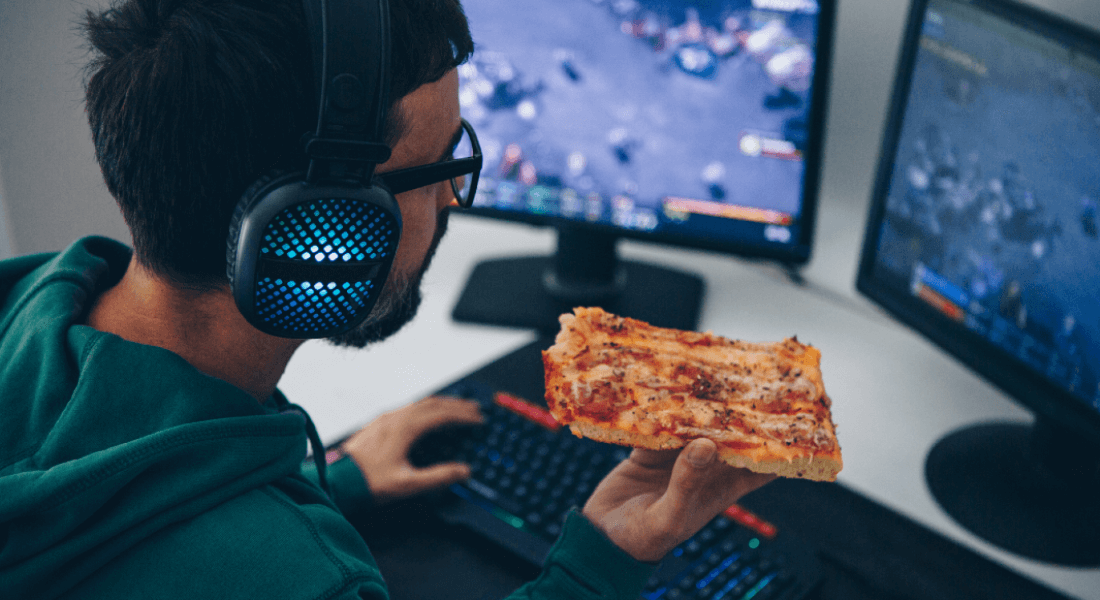
A global survey by the analytics firm Newzoo found how widespread a habit is that many see as harmless: 80% of players worldwide eat or drink something while playing through another level. Nutrition experts link such “gaming snacks” to the risks of overeating and a gradual decline in health.
What’s behind Newzoo’s numbers
The survey statistics paint a fairly detailed picture. Men slightly more often than women combine gaming with eating, but the gap is small. Age has a much more noticeable effect: in North America, among respondents aged 21 to 35, the share of “snacking gamers” jumps to 91% for men and 87% for women.
By food choice, the picture is also fairly uniform:
- 49% of North American gamers prefer salty snacks (chips, crackers, crunchy bread snacks);
- 39% reach for sweets (cookies, chocolate, candy);
- 48% wash it down with soda while playing.
Fruits and vegetables are virtually absent from this list.
Chips instead of apples
The dominance of packaged snacks and soda is unsurprising: they require no preparation, are easy to hold, and don’t take your attention off the screen. However, these are exactly the kinds of foods that are high in calories but low in nutritional value. Fresh fruit, vegetable sticks, or nuts show up in gaming snacks extremely rarely, which only worsens an already unbalanced diet.
Why eating “on autopilot” leads to overeating
Dietitians describe what’s happening with the term “mindless eating” (mindless eating). When attention is fully absorbed by gameplay, the brain is less attuned to fullness cues. A person eats not because they are hungry, but because their hand automatically reaches for the bag.
“We consume food without getting real satisfaction from eating. Most likely, we eat when we’re not hungry, and that leads to consuming more calories than we need,” explained Los Angeles registered dietitian Vandana Sheth in an interview with Digital Trends. She also emphasized: “The foods that are eaten mindlessly are most often packaged, calorie-dense, and offer little nutritional value.”
Sedentary behavior as the second link in the chain
Weight gain is determined not only by how much is eaten, but also by energy expenditure. That’s why it makes sense to look at physical activity levels among those who spend hours in front of a screen with a controller in hand.
Researchers from the Centers for Disease Control and Prevention (CDC), Emory University, and Andrews University examined the health of more than 500 players. The results were telling: gamers, on average, moved less and showed worse health indicators compared with non-gamers. Men had a higher body mass index (BMI), while women showed poorer overall health.
Notably, this fact makes the problem relevant not only for gamers, but also for all other fans of sedentary pastimes. The first to come to mind are fans of various forms of online gambling. With the growing popularity of online casinos such as Megapari, Parimatch, or 1xBet, such games have become far more common.
Sports fans are at risk, especially those who like to watch long matches, such as tennis or cricket. In addition, watching such games is often associated with stress. Especially if it’s not only about watching the games, but also about betting on the outcome of these games. After all, the ability to place bets online has significantly lowered the barrier to entry. We talked about this with experts and learned more about how easy it is to sign up on 1xBet, Mostbet, and other platforms. As a result, it’s now hard to find a fan who hasn’t placed a bet during a match. And this leads to the viewer starting to worry more and eat more.
And there are plenty of similar examples. So the problem goes beyond the video game community.
When habits add up to a “recipe” for problems
The combination of frequent high-calorie snacking, distracted “on autopilot” eating, and sedentary leisure creates fertile ground for weight gain and associated complications. However, Vandana Sheth herself clarifies: the problem is not unique to gamers. A similar scenario unfolds when viewers eat popcorn at the movie theater or finish off a plate of pasta during a binge-watch session. The key role is played by distracted attention, not the specific type of entertainment.
A few tips to reduce the harm
Specialists’ recommendations boil down to simple but effective rules:
- Stick to regular meals and planned snacks so that by the time you play, you don’t end up suddenly hungry.
- Eat mindfully, focusing on the food rather than turning a gaming session into background for chewing.
- Don’t keep snacks within arm’s reach.
Six feet to an honest answer
The last point is supported by a curious experiment. Dr. Brian Wansink, author of the book “Mindless Eating,” said in an interview with the National Institutes of Health: “We found that if you move a candy dish from a person’s desk to a distance of just six feet (about 1.8 m), people eat about half as much. Those six feet created a pause to ask themselves whether they were really that hungry, and about half the time the answer was ‘no.’” A small distance, in essence, turns into a tiny barrier between impulse and action.